
The allure of tiny homes lies not just in their diminutive size, but in the ingenious design required to maximize functionality within limited square footage. This exploration delves into the intricacies of tiny home floor plans, examining various design styles, space-saving techniques, and essential features that contribute to comfortable and efficient living. We’ll navigate the complexities of building codes and explore how lot size influences design, ultimately showcasing the creativity and practicality inherent in these innovative homes.
From minimalist aesthetics to rustic charm, we’ll uncover the diverse approaches to tiny home design, highlighting the careful planning that transforms small spaces into functional and aesthetically pleasing living environments. We will also address common challenges and considerations, providing practical advice and insights to guide potential homeowners through the process of designing and building their dream tiny home.
Space Optimization in Tiny Home Floor Plans
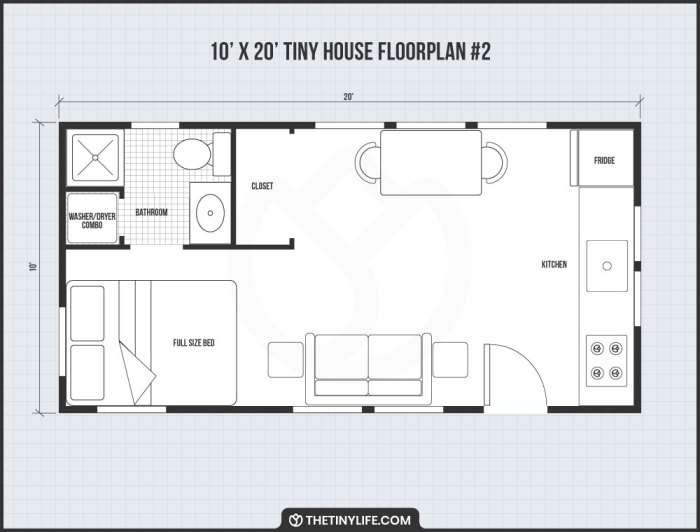
Designing a tiny home necessitates a keen focus on maximizing space. Every square foot must serve multiple purposes, and clever design is key to achieving a comfortable and functional living environment. This section will explore five common space-saving techniques employed in successful tiny home floor plans.
Multifunctional Furniture
Multifunctional furniture is a cornerstone of efficient tiny home design. Pieces that serve more than one purpose dramatically reduce the need for individual items, freeing up valuable floor space. This approach prioritizes versatility and adaptability. For example, a sofa bed combines seating and sleeping areas, while ottomans with built-in storage provide seating and concealed storage for blankets or other items.
A dining table that folds down against a wall transforms from a dining space to a wall-mounted piece, allowing more open floor space when not in use.
- Example 1: A Murphy bed, which folds away into a wall cabinet during the day, freeing up space for a home office or living area.
- Example 2: A coffee table with drawers and a lift-top revealing additional storage space underneath.
- Example 3: A staircase with built-in drawers or cupboards, providing storage while maintaining access to upper levels.
Loft Beds and Sleeping Areas
Elevating sleeping areas to a loft maximizes floor space below. The space underneath can be used for a living area, home office, or even a small kitchen. This design choice is common in tiny homes and allows for a clear separation between sleeping and living areas without sacrificing square footage.
- Example 1: A loft bedroom above a living room, with a ladder or staircase providing access.
- Example 2: A loft bed above a kitchen and dining area, creating a defined sleeping space while maintaining an open floor plan.
Built-in Storage Solutions
Built-in storage solutions maximize vertical space and minimize visual clutter. Instead of freestanding furniture, custom-built cabinets, shelving, and drawers are integrated into the walls and under stairs, creating seamless storage that doesn’t intrude on the living space. This also helps maintain a clean, uncluttered aesthetic.
- Example 1: Custom-built cabinetry extending from floor to ceiling in a kitchen, maximizing storage while maintaining a streamlined appearance.
- Example 2: Drawers built into the steps of a staircase, providing extra storage without sacrificing the functionality of the stairs.
- Example 3: Wall-mounted shelves that utilize the vertical space to store books, decorations, and other items.
Sliding Doors and Pocket Doors
Traditional hinged doors require significant swing space, which can be a luxury tiny home dwellers cannot afford. Sliding doors or pocket doors, which slide into the wall or along a track, eliminate the need for that swing space. This creates a more open and spacious feel, particularly beneficial in smaller spaces.
- Example 1: A sliding barn door separating the bathroom from the living area, maintaining privacy while saving space.
- Example 2: Pocket doors used for closets or other smaller rooms, allowing for a seamless transition between spaces.
Folding and Convertible Furniture
Folding or convertible furniture provides adaptability and flexibility. A drop-leaf table expands for dining and folds down for storage, while folding chairs can be easily stored when not in use. This type of furniture allows for easy transitions between different activities and functions within the limited space.
- Example 1: A folding dining table that expands to accommodate guests and folds down to a smaller size when not needed.
- Example 2: Folding chairs that can be easily stored away when not in use, freeing up floor space.
- Example 3: A convertible sofa that can transform into a bed, providing a comfortable sleeping area without the need for a separate bed.
Essential Features in Tiny Home Floor Plans
Creating a functional and comfortable tiny home requires careful consideration of space and the inclusion of key features. While aesthetics are important, prioritizing practicality ensures a liveable and enjoyable space. This section details five essential features crucial for any well-designed tiny home floor plan, along with a sample plan incorporating these elements.
The design of a tiny home demands a strategic approach to maximize functionality within a limited footprint. Each element must serve a purpose, contributing to both convenience and comfort. Overlooking even one crucial feature can significantly impact the overall livability of the space.
Multifunctional Space Design
Effective space utilization is paramount in tiny homes. Multifunctional furniture and adaptable areas are key to achieving this. For example, a sofa that converts into a bed saves valuable floor space, while a dining table that folds away against a wall frees up space when not in use. Clever storage solutions integrated into furniture, such as ottomans with built-in storage or beds with drawers underneath, further enhance space efficiency.
These designs minimize clutter and maximize usability.
Efficient Kitchen Layout
The kitchen, despite its small size, should be highly functional. A galley-style kitchen, characterized by its linear layout, is ideal for maximizing space and workflow. Consider installing pull-out shelves and drawers to optimize storage, and a deep sink to accommodate larger dishes. Appliances should be carefully selected to be both compact and efficient, such as a small but powerful refrigerator and a two-burner cooktop.
This ensures all necessary kitchen functions are easily accessible without compromising space.
Well-Planned Bathroom
Bathroom design in tiny homes requires careful planning. A compact shower stall, ideally with a glass enclosure to visually expand the space, is a must. A combination toilet and sink unit can save significant space, and strategically placed shelves maximize storage for toiletries. Ventilation is crucial to prevent moisture buildup, so consider a well-placed exhaust fan. Proper lighting is also essential for functionality and to create a sense of openness.
Adequate Storage Solutions
Storage is a critical aspect of tiny home living. Built-in shelving, drawers, and lofts should be strategically incorporated throughout the home. Vertical space should be utilized fully, with tall cabinets and overhead storage. Custom-designed solutions often prove most effective in maximizing storage capacity within the constraints of a small space. Hidden storage areas, such as under stairs or within furniture, are excellent for keeping belongings organized and out of sight.
Natural Light and Ventilation
Maximizing natural light and ventilation is essential for creating a bright and airy atmosphere in a tiny home. Large windows strategically placed to capture sunlight throughout the day can significantly improve the feel of the space. Skylights can also be incorporated to maximize natural light. Proper ventilation, through windows and strategically placed vents, is essential for air circulation and to prevent the buildup of moisture and odors.
This helps maintain a comfortable and healthy living environment.
Sample Tiny Home Floor Plan
The following table presents a sample floor plan incorporating the five essential features discussed above. Dimensions are approximate and can be adjusted based on individual needs and preferences.
| Area | Description | Dimensions (ft) | Notes |
|---|---|---|---|
| Living Area | Sofa bed, small coffee table, built-in shelving | 10 x 12 | Multifunctional space; sofa converts to bed |
| Kitchen | Galley-style kitchen with sink, two-burner cooktop, small refrigerator, pull-out shelves | 6 x 8 | Efficient layout maximizes workflow and storage |
| Bathroom | Compact shower, combination toilet/sink unit, ventilation fan | 4 x 6 | Space-saving design with built-in storage |
| Loft Bedroom | Accessible via ladder; includes storage under the bed | 8 x 10 | Utilizes vertical space for sleeping area |
Floor Plan Considerations for Different Lot Sizes
Lot size significantly impacts the design and functionality of a tiny home. A larger lot allows for more expansive floor plans and greater integration with outdoor living spaces, while a smaller lot necessitates a more compact and carefully considered design to maximize space and ensure comfortable living. Careful consideration of orientation, accessibility, and the relationship between the indoor and outdoor environments are crucial for creating a successful tiny home design regardless of lot size.
Tiny Home Floor Plans for Small Lots
Designing for a small lot demands efficiency and clever space-saving strategies. The focus should be on maximizing vertical space and utilizing multi-functional furniture. A well-planned small lot tiny home prioritizes accessibility and avoids feeling cramped.
- Example Plan A: This plan features a loft bedroom accessed by a ladder, maximizing floor space for the main living area. The kitchen and bathroom are compact but well-equipped, and a small, covered deck extends the usable outdoor space. The home is oriented to take advantage of natural light and breezes, minimizing the need for artificial lighting and cooling.
- Key Features: Loft bedroom, compact kitchen and bathroom, integrated storage solutions, covered deck, south-facing orientation.
Tiny Home Floor Plans for Medium Lots
Medium-sized lots offer more flexibility in design, allowing for larger floor plans and the inclusion of more amenities. This allows for a better balance between indoor and outdoor living areas, providing more options for personalizing the home’s layout and style.
- Example Plan B: This design incorporates a separate sleeping area on the main floor, eliminating the need for a loft and improving accessibility. A larger kitchen and bathroom are included, along with a more spacious living area. A wraparound deck extends the living space outdoors, offering ample room for relaxation and entertaining. The home is positioned to maximize privacy and sun exposure.
- Key Features: Main floor bedroom, larger kitchen and bathroom, spacious living area, wraparound deck, strategic placement for privacy.
Tiny Home Floor Plans for Large Lots
Large lots provide the greatest freedom in design, enabling the creation of more expansive tiny homes with a greater emphasis on outdoor living. This allows for more extensive outdoor features, like gardens, workshops, or even separate guest structures.
- Example Plan C: This plan features a larger footprint, including a dedicated office or studio space. A sizable deck or patio flows seamlessly from the living area, connecting the indoors and outdoors. The home is designed to take full advantage of the ample lot size, perhaps incorporating features like a detached garage or workshop. Careful consideration is given to the placement of the home to maintain a sense of privacy while maximizing views.
- Key Features: Larger footprint, dedicated office/studio space, expansive deck or patio, potential for detached structures, optimized views and privacy.
Building Codes and Regulations for Tiny Homes
Building a tiny home, while appealing for its simplicity and affordability, necessitates careful consideration of local building codes and regulations. These regulations, often varying significantly between municipalities and even counties, can significantly impact the design, construction, and ultimately, the legality of your tiny home project. Ignoring these regulations can lead to costly delays, fines, and even the forced demolition of your structure.
Understanding and adhering to these codes is crucial for a successful tiny home build.Local building codes and regulations often impose restrictions on various aspects of tiny home construction. Common restrictions frequently involve minimum square footage requirements, which might exceed the typical size of a tiny home. Other limitations may concern plumbing and electrical systems, requiring specific certifications and installations that might not be easily adaptable to smaller spaces.
Height restrictions, particularly for structures on wheels, can also present significant challenges. Finally, stipulations concerning foundation types, insulation requirements, and even the materials used in construction are frequently encountered. For instance, a community might mandate a specific type of foundation, even if it’s disproportionately expensive for a tiny home, or require a level of insulation exceeding what is typically used in such small spaces.
Minimum Size Requirements and Zoning Regulations
Many jurisdictions have minimum habitable square footage requirements for dwellings. These requirements often significantly exceed the size of a typical tiny home, creating immediate conflicts. Zoning regulations further complicate matters, as some areas might prohibit tiny homes altogether or restrict them to specific zones, such as agricultural or RV parks. For example, a town might require a minimum living area of 800 square feet, rendering a 400-square-foot tiny home non-compliant.
Zoning restrictions might dictate that tiny homes on wheels can only be situated on land zoned for recreational vehicles, limiting the available locations for construction.
Navigating the Permitting Process
Obtaining the necessary permits for a tiny home project involves a multifaceted process. Successful navigation requires thorough planning and careful attention to detail.
- Research Local Codes: Begin by thoroughly researching the specific building codes and zoning regulations in your target location. Contact the local building department directly to obtain the most up-to-date information and clarify any ambiguities.
- Develop Detailed Plans: Create comprehensive plans that meticulously address every aspect of the tiny home’s design and construction, ensuring complete compliance with all applicable codes. These plans should include detailed specifications for plumbing, electrical, and structural components.
- Submit Permit Application: Submit a complete and accurate permit application to the local building department, including all necessary documentation such as site plans, construction drawings, and engineering calculations. Be prepared to answer any questions from the building inspector.
- Inspections: Undergo all required inspections during the construction process. These inspections will verify that your construction adheres to the approved plans and meets all building code requirements. Corrective measures may be required to address any deficiencies.
- Certificate of Occupancy: Once all inspections are completed satisfactorily, obtain a certificate of occupancy, which legally permits you to inhabit the tiny home.
Illustrative Descriptions of Tiny Home Floor Plans
Exploring the diverse possibilities of tiny home living, we delve into three distinct floor plans, each designed to maximize space and functionality while offering a unique living experience. These descriptions aim to provide a vivid sense of what it would be like to inhabit these spaces, emphasizing the interplay of light, materials, and overall ambiance.
The following sections detail three unique tiny home floor plans, highlighting their spatial flow, functionality, and the sensory details that contribute to their distinct character. Each plan prioritizes efficient use of space while offering a comfortable and personalized living environment.
The Loft-Style Studio
This design prioritizes an open-concept layout, maximizing the feeling of spaciousness within a compact footprint. The primary living area seamlessly integrates the kitchen, dining, and living room, fostering a sense of connection and flow. A loft area provides a private sleeping space, accessible via a small, stylish staircase.
- Lighting: Large windows flood the main living area with natural light, creating a bright and airy atmosphere. Recessed lighting strategically placed throughout complements the natural light, providing ample illumination even in the evenings. A pendant light fixture hangs above the kitchen island, adding a touch of elegance.
- Materials: Light-colored wood flooring runs throughout the home, reflecting the natural light and enhancing the sense of spaciousness. White-washed walls create a clean, minimalist aesthetic. The kitchen features sleek, modern cabinetry, and stainless steel appliances.
- Ambiance: The overall ambiance is one of airy openness and modern simplicity. The combination of natural light, light-colored materials, and minimalist design creates a calming and inviting atmosphere, perfect for a relaxed and comfortable lifestyle.
The Scandinavian-Inspired Tiny Home
This plan emphasizes a minimalist aesthetic inspired by Scandinavian design principles. Functionality and simplicity are key, with every element carefully considered to optimize space and create a serene living environment. The layout features a distinct separation between the living area and the sleeping area, offering a greater sense of privacy.
- Lighting: Natural light is maximized through large windows, strategically positioned to take advantage of sunlight throughout the day. Soft, warm-toned lighting is incorporated in the evenings, creating a cozy and inviting atmosphere. Simple pendant lights are used above key areas like the kitchen and dining table.
- Materials: Natural materials are used throughout, including light wood paneling, a neutral-toned palette for the walls, and comfortable, natural fiber rugs. The kitchen features simple, functional cabinetry and appliances in a muted color scheme.
- Ambiance: The overall ambiance is one of calm, simplicity, and understated elegance. The use of natural materials, soft lighting, and a neutral color palette creates a sense of peace and tranquility, perfect for a mindful and relaxed lifestyle.
The Multi-Functional Tiny Home
This floor plan showcases the ingenuity of space-saving design. It prioritizes multi-functional furniture and clever storage solutions to maximize usability within a compact area. A Murphy bed folds away neatly into the wall, transforming the space from a bedroom to a living room during the day.
- Lighting: A combination of natural light from strategically placed windows and energy-efficient LED lighting ensures the space remains bright and functional throughout the day and night. Adjustable lighting fixtures allow for customization based on mood and activity.
- Materials: Durable and versatile materials are used throughout, emphasizing practicality and ease of maintenance. Built-in storage units maximize space, while fold-down tables and chairs add flexibility to the living area. The use of a neutral color palette keeps the space feeling open and uncluttered.
- Ambiance: The overall ambiance is one of flexible functionality and modern efficiency. The space adapts effortlessly to different needs and activities, creating a dynamic and versatile living environment.
Exploring “FLOOR PLANS” as a Concept
Floor plans are fundamental to architectural design, serving as two-dimensional representations of a building’s layout viewed from above. They illustrate the arrangement of rooms, walls, doors, windows, and other key features, providing a blueprint for construction and a visual guide for understanding the spatial organization of a structure. Their importance lies in their ability to facilitate clear communication between architects, builders, and clients, ensuring that the final product aligns with the intended design.
Thorough and well-executed floor plans minimize errors during construction and contribute to a more efficient and effective building process.Floor plans are crucial for visualizing and planning the spatial relationships within a building, allowing for efficient use of space and thoughtful consideration of traffic flow. Detailed floor plans allow stakeholders to understand the building’s functionality before construction begins, leading to better decision-making and reduced costs associated with unforeseen issues or modifications.
Traditional Home Floor Plans versus Tiny Home Floor Plans
Traditional home floor plans generally prioritize spaciousness and compartmentalization. They often feature distinct rooms with dedicated purposes, prioritizing individual areas for living, dining, sleeping, and entertaining. Design philosophy tends to focus on providing ample space and separation between functions. Functionality often emphasizes convenience and comfort, reflecting a lifestyle that values both privacy and expansive living areas. A typical example might be a large suburban house with separate bedrooms, a formal living room, a kitchen, a dining room, and multiple bathrooms.In contrast, tiny home floor plans emphasize efficient space utilization and multi-functional design.
They often integrate living areas, maximizing the limited square footage available. The design philosophy centers on minimalism and adaptability, reflecting a lifestyle that values simplicity and resourcefulness. Functionality prioritizes versatility and adaptability; spaces often serve multiple purposes to minimize wasted area. For instance, a sofa might convert into a bed, or a kitchen counter might double as a dining table.
A common example is a tiny home with a loft bedroom above a combined living/kitchen/dining area. This sharp contrast highlights the different lifestyles and priorities accommodated by these differing approaches to home design.
Designing a tiny home is a balancing act between functionality and aesthetics, a challenge met with creativity and innovation. By carefully considering space optimization techniques, essential features, and the influence of building codes and lot size, the seemingly impossible task of comfortable living in a small space becomes entirely achievable. This exploration of tiny home floor plans reveals not just efficient designs, but a new paradigm in sustainable and intentional living, proving that small can indeed be mighty.
Essential FAQs
What are the typical costs associated with building a tiny home?
Costs vary greatly depending on materials, finishes, and location. Expect a wide range, from $20,000 to $70,000 or more.
How do I find a qualified builder for a tiny home?
Seek recommendations, check online reviews, and verify licensing and insurance. Consider interviewing several builders before making a decision.
What are the legal implications of living in a tiny home?
Zoning regulations and building codes vary significantly by location. Research local ordinances before purchasing land or beginning construction. Some areas may not permit tiny homes as primary residences.
Can I finance a tiny home?
Securing financing for a tiny home can be challenging. Some traditional lenders are hesitant, but specialized lenders or personal loans may be options. Consider the total cost and your financial situation.


